Cyber Incident Response Done Right: Moving from Panic to Process
When you think about it, every incident response playbook is supposed to be about control, not chaos. Yet when a breach hits, it often looks more like a fire drill than a framework.
Max Alton
Feb 10, 2026
The Anatomy of a Panic-Driven
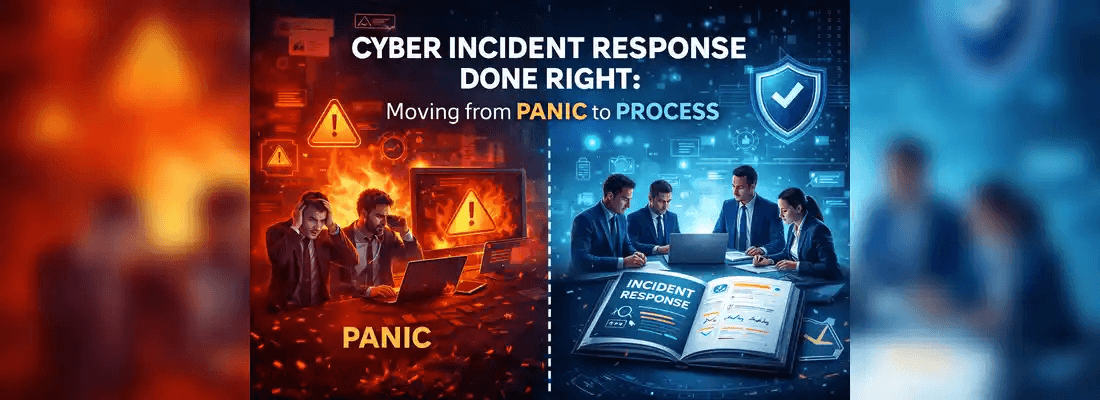
- When alerts start flashing, panic tends to replace procedure. Security leads issue orders without structure. Engineers scramble to patch. Communication channels overflow with noise. It creates movement without direction. Energy that looks productive but isn’t. This chaos stems from poor planning and an overreliance on instinct.
1code: ({ value }: any) => {
2    return (
3        <div className="my-8 rounded-xl overflow-hidden">
4            <SyntaxHighlighter
5                language={value.language || "javascript"}
6                style={oneDark}
7                showLineNumbers
8                customStyle={{
9                margin: 0,
10                padding: "20px",
11                fontSize: "14px",
12                }}
13            >
14                {value.code}
15            </SyntaxHighlighter>
16        </div>
17    );
18},

- Without clear escalation paths or defined communication roles, everyone improvises. Improvisation feels fast but multiplies risk. Each rushed action compounds confusion, leaving teams exhausted and no closer to a resolution.
The illusion of control is dangerous. A flurry of activity looks like progress, but it’s just reaction without rhythm. When the dust settles, post-mortems reveal the same mistakes: no plan, no documentation, and no clarity. Panic-driven effort feels heroic in the moment but costs precision and trust in the long run.
About

Delivering independent journalism, thought-provoking insights, and trustworthy reporting to keep you informed, inspired, and engaged with the world every day.


